





Holly is always associated with the winter holidays, but have you ever considered them as a permanent fixture in your garden? Whether you choose an evergreen variety or deciduous, most holly species are extremely low maintenance, shade-tolerant and thrive in the Midwest climate.
Some types of holly can produce berries, specifically pollinated female plants. This means that in order to have a plant that produces berries, you actually have to have two plants. There needs to be a male plant within fifty feet of the main female that you wish to produce berries. It’s also important to note that both female and male holly can flower when planted in a spot that receives more than less sun.
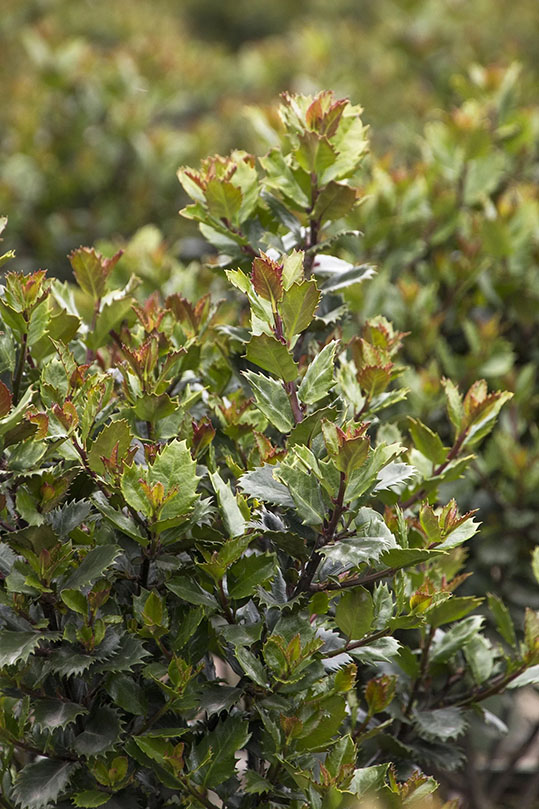
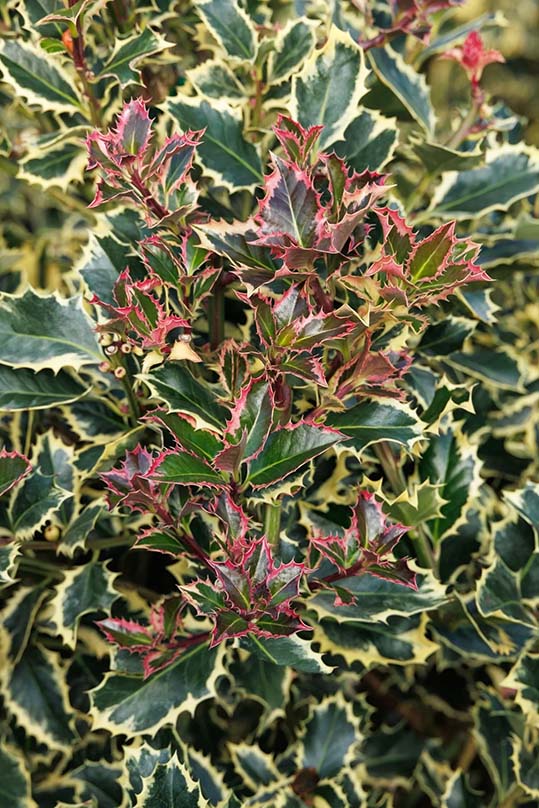
One of the largest variations of holly is the Variegated English Holly, maxing out at around 15 to 20 feet tall and 8 to 12 feet wide. As a very solid, large grower, this holly could make a great privacy screen, or be used as a statement piece. Its leaves are lined with white variegation that starts out as pink in newer branches. Despite holly often being sensitive to pruning, this variation is very tolerant to trims and is a great option for adding interesting custom shapes to the garden.
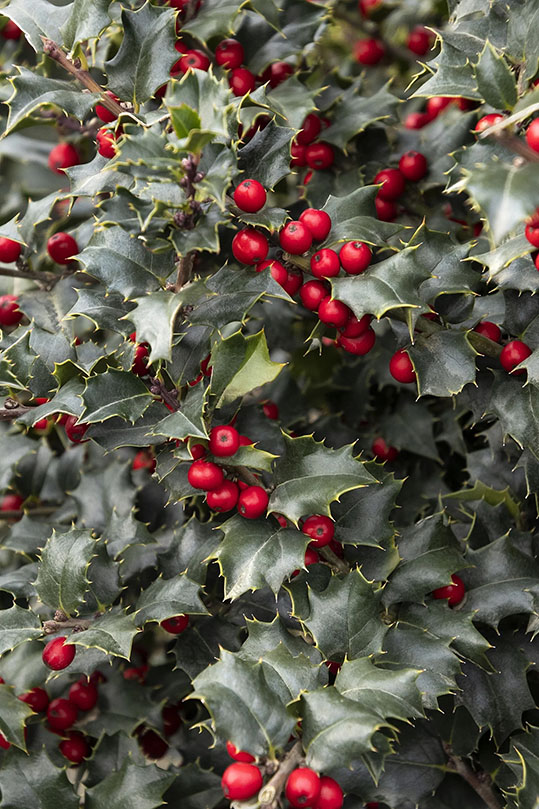
Red Beauty® Holly, is another large option, coming in at 7 to 10 feet tall 4 to 5 feet wide. With mostly solid, waxy, spiky leaves, this is pretty much the standard look that most think of in reference to holly. It is an evergreen that needs little to no pruning to maintain a pyramidal shape. To get those bright red berries, this plant is often paired with Blue Prince Holly.
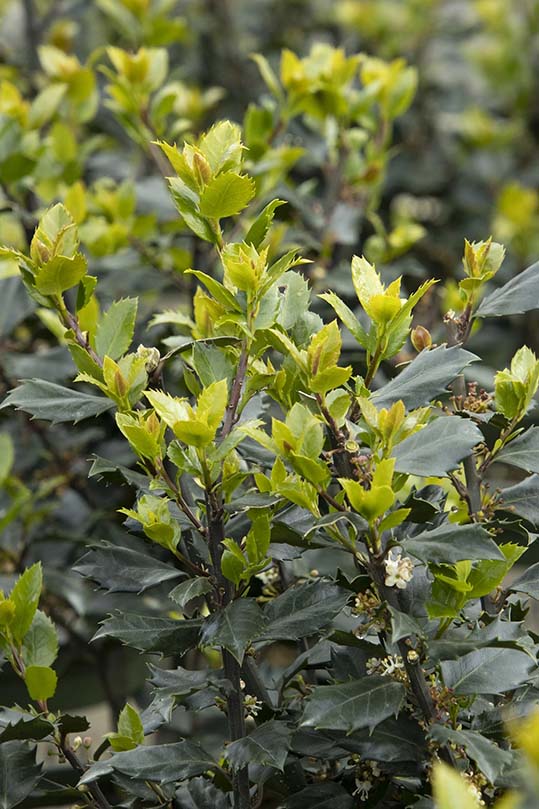
As a variation that tends to spread out more horizontally, the Blue Prince Holly is an option that can serve as a hedge or bush, maxing out to 6 to 8 feet tall and 3 to 6 feet wide. Along with having solid green foliage that works as a great filler plant, this variation also makes a great pollenizer for other female varieties.
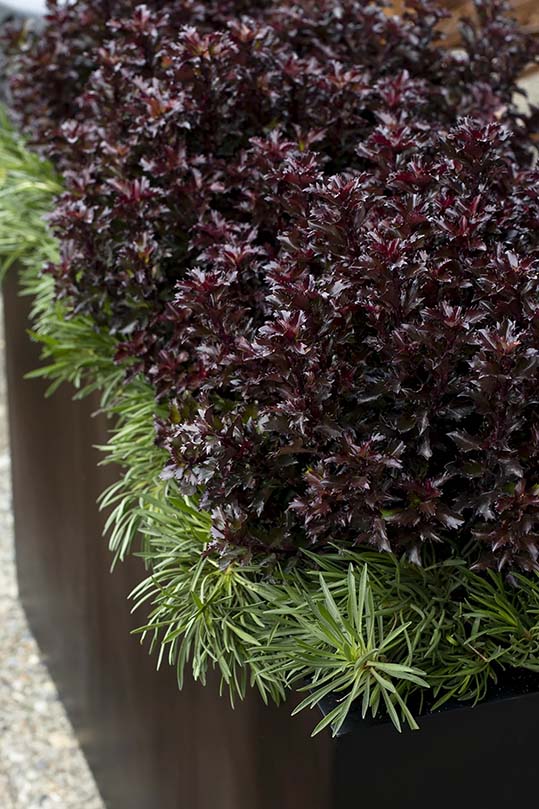
Little Rascal® Holly is one of the most cold hardy holly varieties, as well as one of the smallest, at 2 feet tall, 3 feet wide at peak. Its low growing bright green foliage in the warmer months, turns deep purple in the cold winter months, making this quite a unique choice and a great filler plant.
Similarly, though slightly bigger, Scallywag™ Holly has been known to thrive in pots, troughs and raised planters. It also changes to a purple-magenta in the colder months, but definitely prefers full sun. The added bonus of this variety is that it has an improved disease and oest resistance.
