

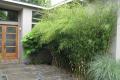

If you know anything about bamboo, you may be intimidated by the thought of introducing it to your garden. Bamboo is notorious for being an aggressive spreader that can get out of hand quickly. The truth of this is that while many types of bamboo are fast spreaders, not all are equally so. There is an entire category of bamboo known for its tendency to spread slowly, while still growing at a fast pace vertically. Additionally, there are lots of variations that do not thrive in the Midwest climate and can grow more slowly as a result. Bamboo can be a huge benefit to the garden as a natural privacy screen or as a way to prevent soil erosion on sloped areas.
There are two main types of bamboo—clumping sympodial and running sympodial. The primary difference is the way the bamboo’s rhizomes, or underground stems, spread. “Clumping” means that the rhizomes only grow in a u-shaped direction upwards, therefore spreading only a few inches a year. The rhizomes of “running” bamboo spread horizontally and are typically extremely hardy. Running bamboo tends to make great groundcover or natural fencing but certainly needs more maintenance than its clumping versions. A minimum of bi-annual root pruning is the most effective method for keeping running bamboo in check.
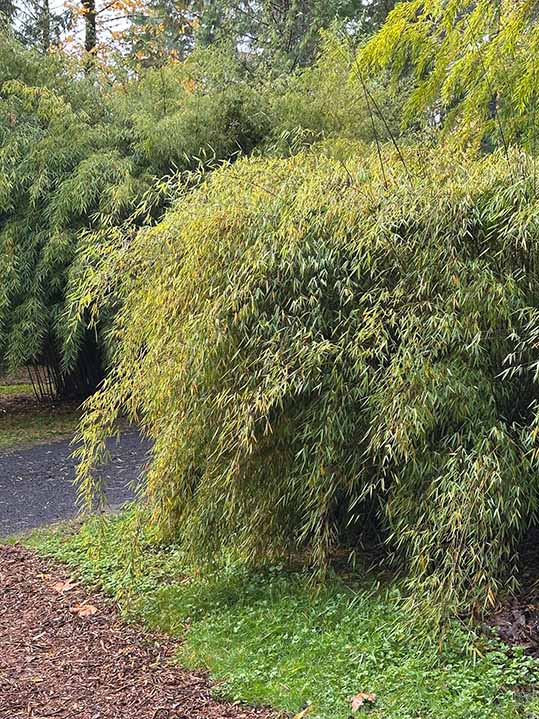
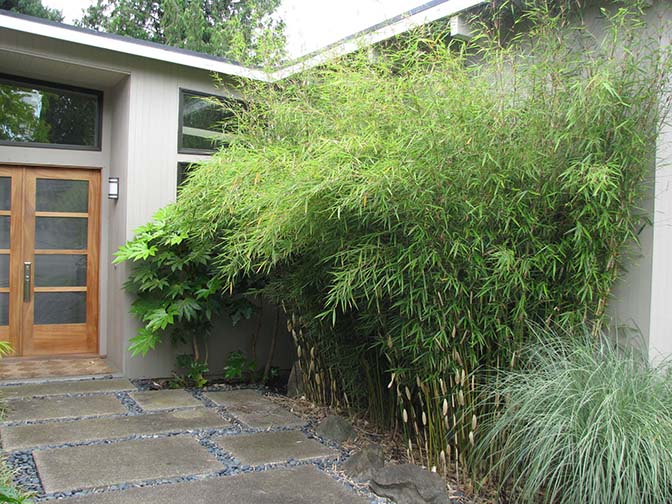
A great clumping bamboo option that thrives in the midwest is the Fargesia. Bamboo within this family are cold tolerant and can grow nearly anywhere in the U.S., and do not spread more than 4-6 inches per year. Fargesia make great hedges with foliage that stays green year-round and get to about 8-16 feet tall. They prefer mostly shade but can handle some direct sunlight. Some variations can produce beautiful colors in their prime growing season and location. Fargesia sp. 'Jiuzhaigou IX' and Fargesia robusta 'Campbell' are a few great choices!
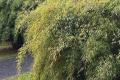
For those willing to put in a little extra effort, there are numerous types of running bamboo types such as timber and groundcover bamboos for variation. Phyllostachys vivax, or Chinese Timber Bamboo, is one of the hardiest and largest bamboo types that have been known to survive in the U.S. In perfect conditions, Chinese Timber bamboo has been known to grow to 70 feet tall and 5 inches in diameter. With beautiful silvery stalks and bushy leaves that grow near the tops of the culms, this plant can serve a similar purpose in your garden as trees!
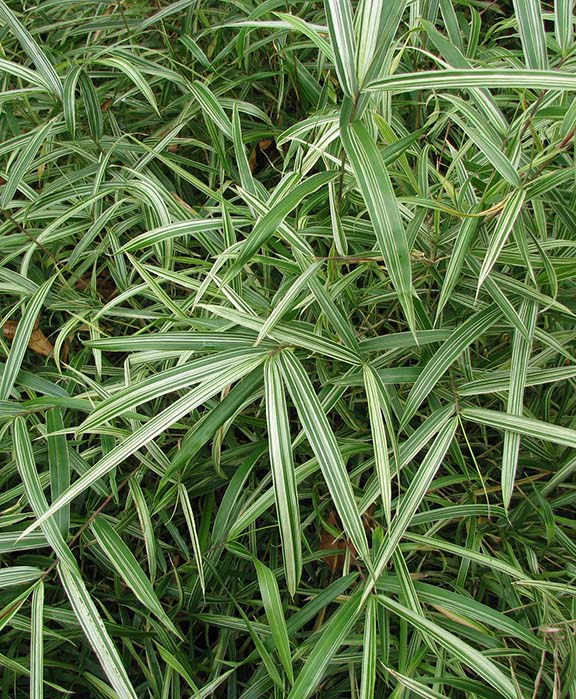
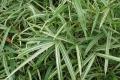
In terms of groundcover bamboos, Pleioblastus chino 'Variegatus is one of the most unique options, with long and slender variegated leaves that create an elegant hedge. On the opposite end of the spectrum, Pleioblastus pygmaeus is solid green and one of the smallest bamboo varieties. This dwarf bamboo is popularly used in bonsai.
While bamboo certainly has a reputation for being an aggressive spreader, it’s important to know that this habit does not apply to all bamboo variations. Whether you are looking to add color, height, groundcover or privacy to your garden, there are so many bamboo types that are suitable for the Midwest.
