

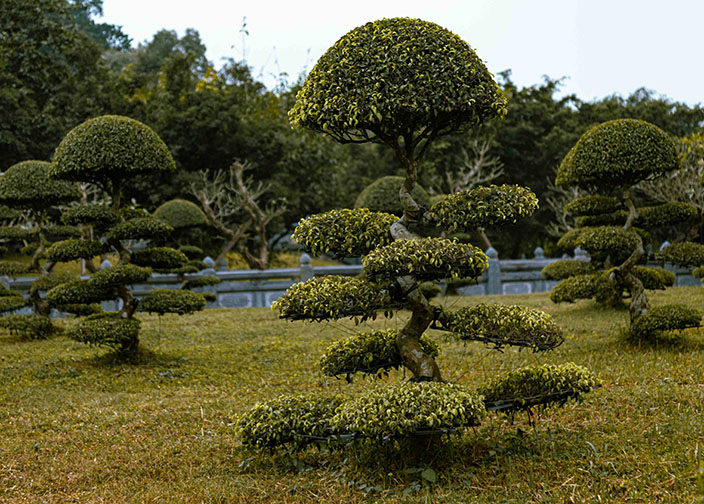



Topiary is a common style of landscaping used to complement hardscapes and architecture. The often soft curves of the hand-shaped bushes help contrast with the sharp angles of buildings and other architectural structures. While topiary is often associated with luxury landscaping, you might find it to be less intimidating than it seems.
Boxwood, Yew Bush, Japanese Holly Shrub, Privet Shrub, Arborvitae Shrub, Cherry Laurel Shrub and Dwarf Alberta Spruce Tree are all plants that are commonly used for topiary shapes. The best options are bushes and small trees that grow full with small, dense foliage all year round. This includes primarily evergreens, which are also hardy and typically can withstand, or even thrive with excessive pruning.
Some options for tackling topiary yourself include buying existing topiary, using topiary frames to trim shapes onto healthy existing bushes or starting from scratch to slowly train new plants over time. For example, you can train a bush to stay short and full at the bottom to eventually form a ball by repeatedly trimming down the height during the growing season. Eventually the bush will stop trying to grow up, and will instead put energy into growing out. Topiary frames are wire cages that you can put over mid-sized established bushes to help train them into a given shape. As limbs grow outside of the cage, you can simply trim them off and follow the lines of the cage to keep the shape.
When it comes to freehanding your topiary shapes, there are a few general tricks that the pros use. One tip that you will commonly read about is to leave a tuft or a single branch sticking up on the top center of the bush until you are completely done pruning. That way you will always know where the natural center is, so as you significantly trim down the sides you will be less likely to make an uneven shape.
Another big reminder when trying out topiary is that you still have to keep the plant's needs in mind. One of the toughest parts of topiary is finding a place that is both visually appealing and adequate to sustain the plant’s well being. Additionally, every plant has its limits when it comes to pruning, no matter how hardy. Know when the plant’s ideal growing season is. Typically it’s June for most evergreens, and you can keep the trimming minimal through the end of summer. It's usually not a good idea to try trimming your bushes in the colder months, as they may not be able to recover.
Here are three of the most common topiary shapes to try out:
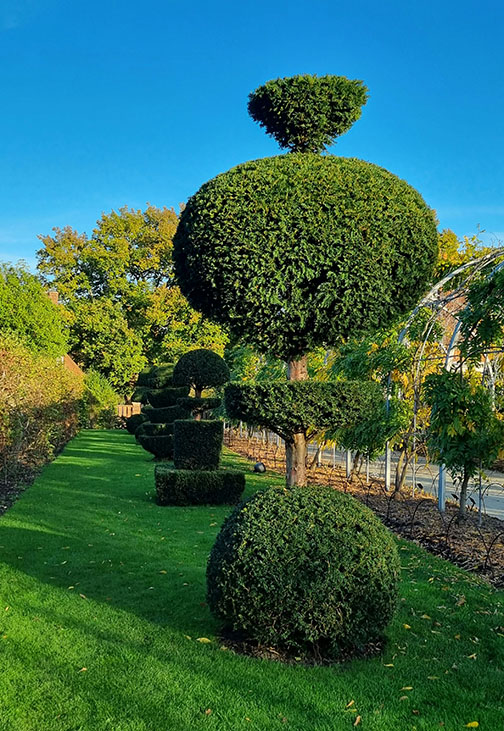
Ball: The easiest shape for beginners! Yews and boxwoods are great bushes for this.
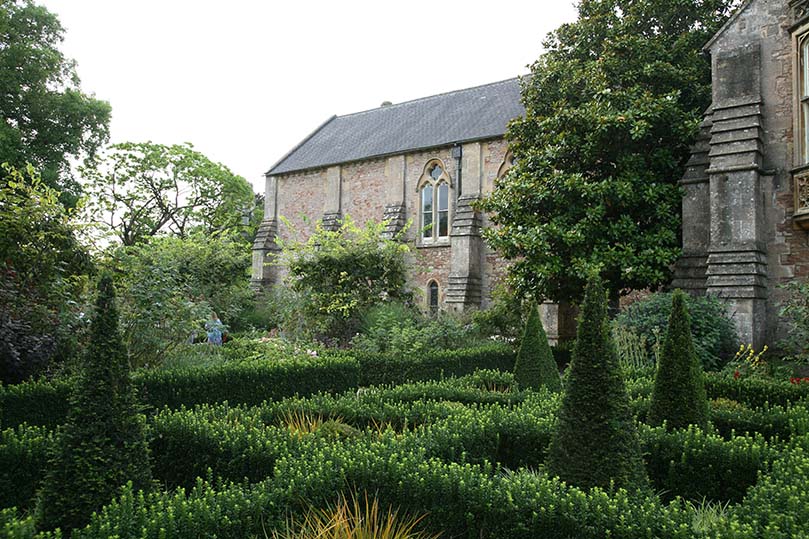
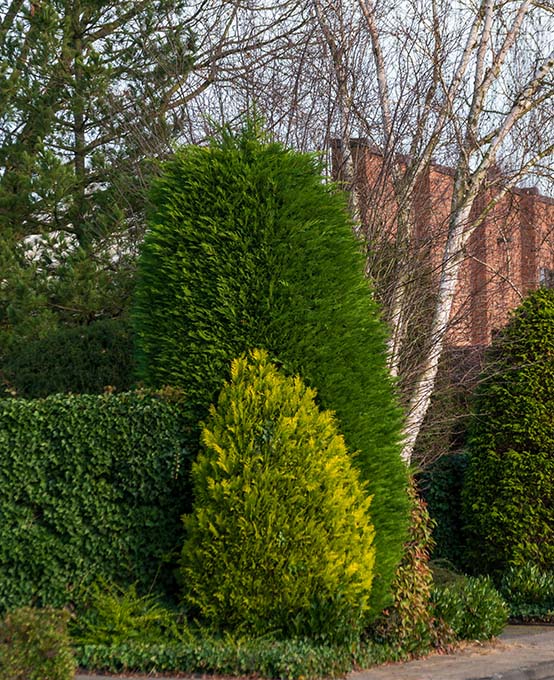
Cone: Arborvitae or boxwood that have matured and been trained to grow tall are ideal options. Both can be trained to be either tall or short and full.
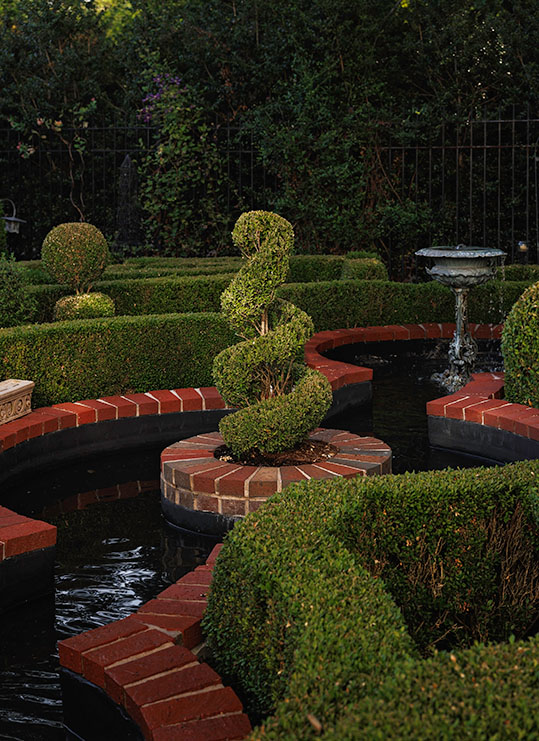
Spiral: These seem tricky, but are not as you might think. Bushes that are naturally tall like Alberta Spruce, Cypress or Privet are a good starting point. You want a plant that has a sturdy trunk. To cut a spiral, you can use a ribbon or tape wrapped around the bush as a guide to cut broad grooves down to the trunk, then remove and do finishing touches.
