



















I like surprises!” declares Celeste Baxter as she strolls through her and her husband, Brent's, Frontenac garden.
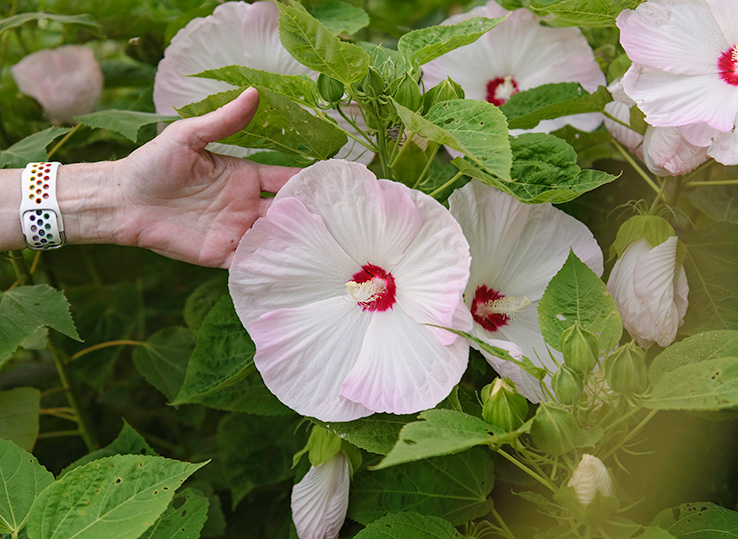
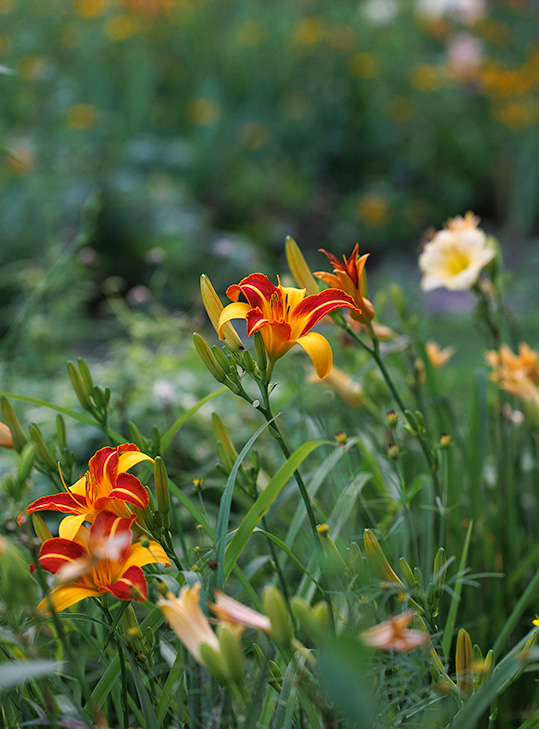
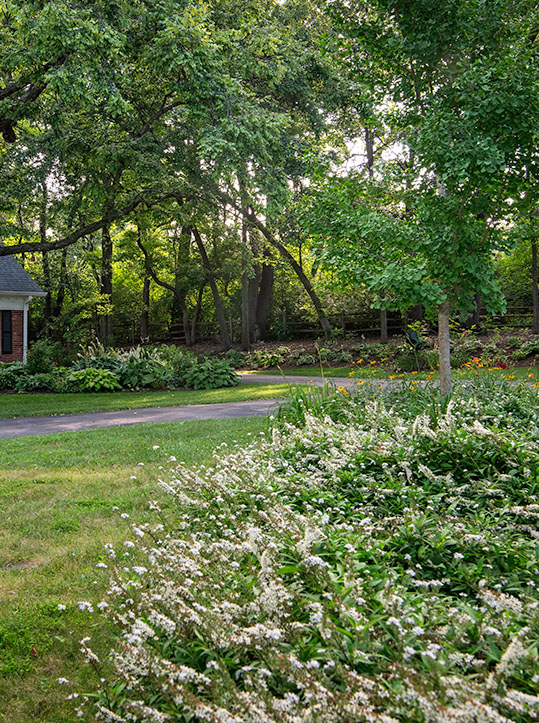
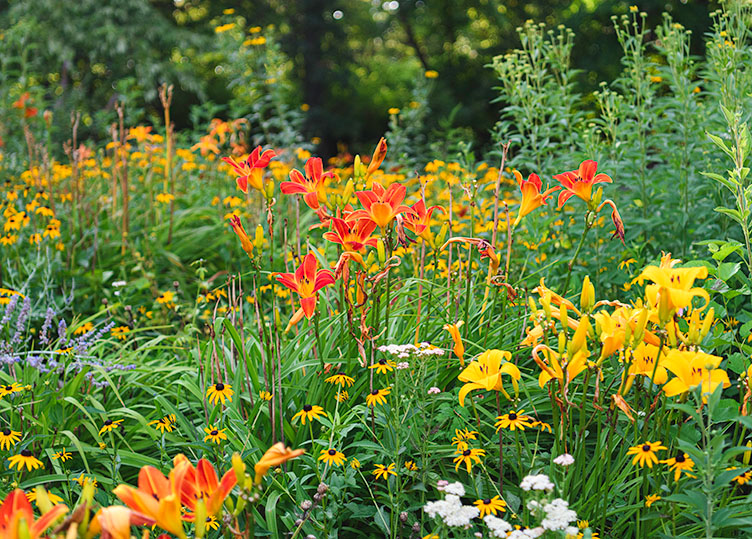
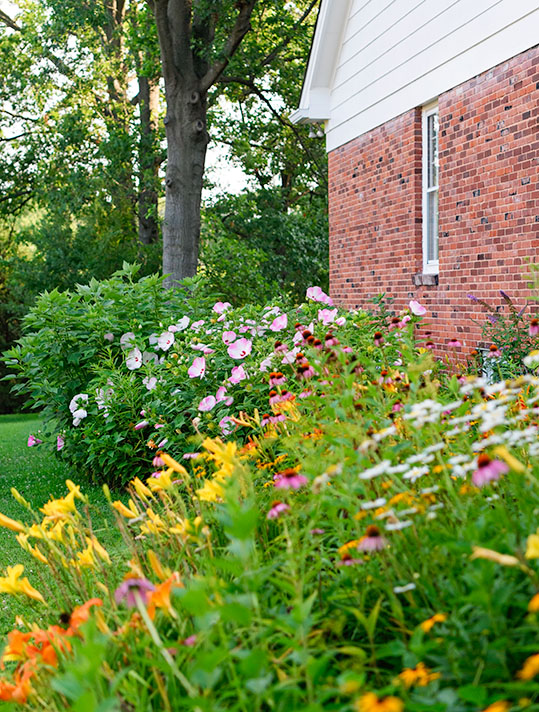
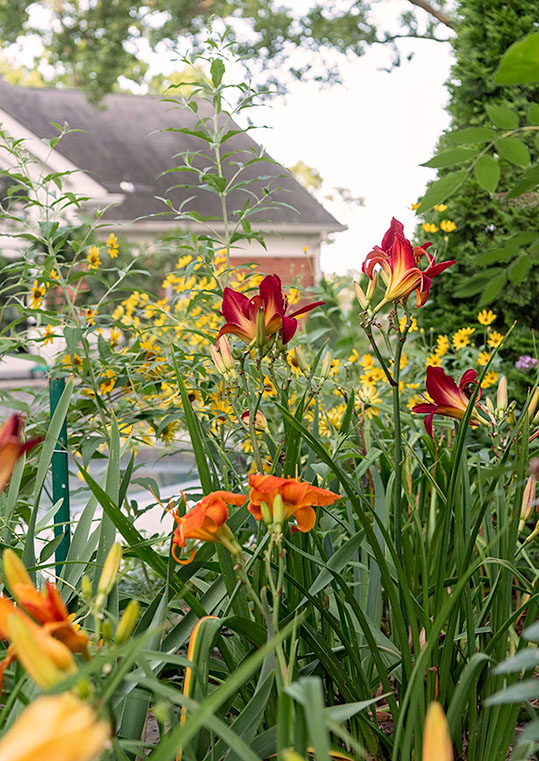
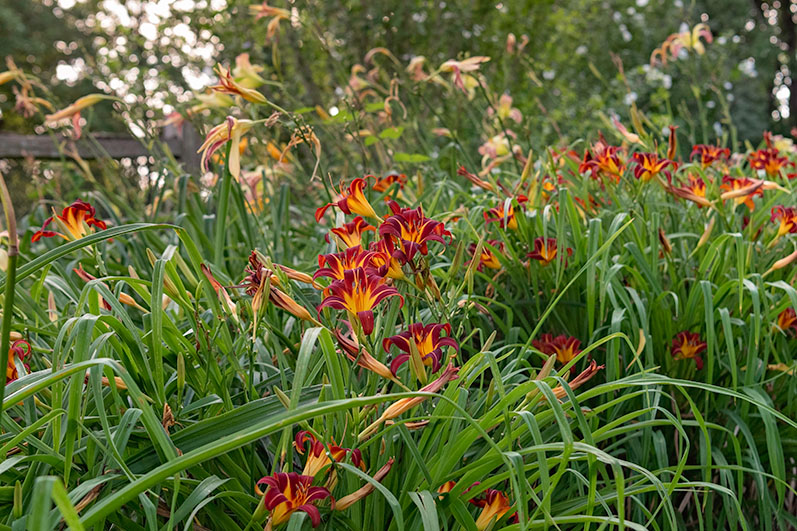
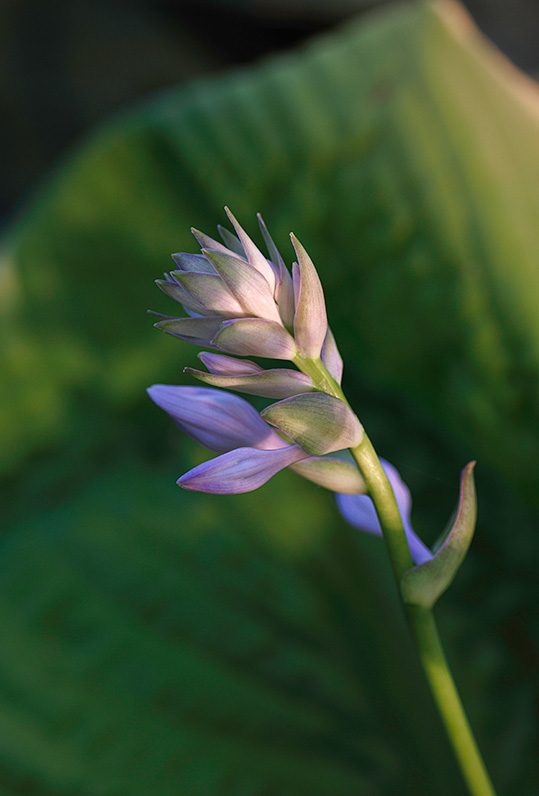
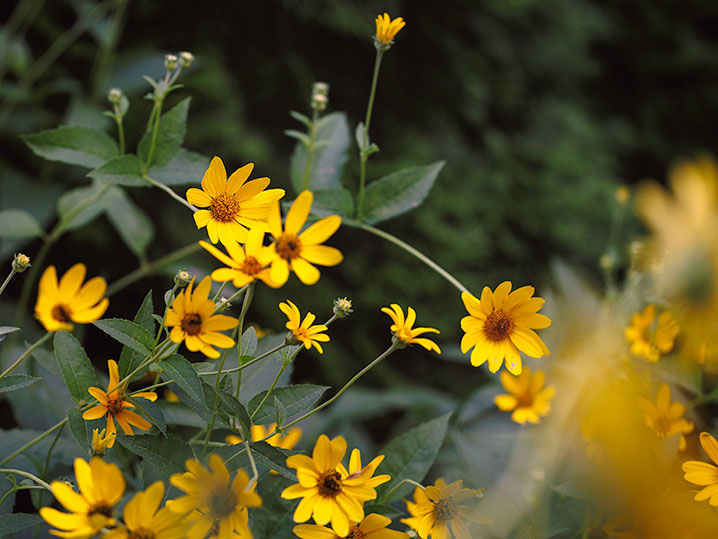
She is surrounded by the rich sunset hues of hundreds of daylilies, mounds of purple and gold created by plantings of different coneflower varieties and scarlet-centered, blush-colored hibiscus blossoms the size of giant saucers. All those vibrant, jewel colors are offset by the sparkling emerald green of approximately 350 lush-leafed hostas.
The garden's beds, planted on an acre and a quarter of land, flow together beautifully. Celeste has worked over the years with Rita Diekemper and Craig Schrock of Gardens of Grace to create necessary hardscape, that while manmade, looks perfectly natural. To enhance that design element, she has in no way micromanaged her landscape. Celeste is adventurous enough to plant the unidentified bare roots of the daylilies, irises and hostas she loves, not knowing exactly what color flowers or leaf shades will emerge. She is equally inclined to let her perennials go to seed over the winter and be delighted where some new plant might break ground in the spring.
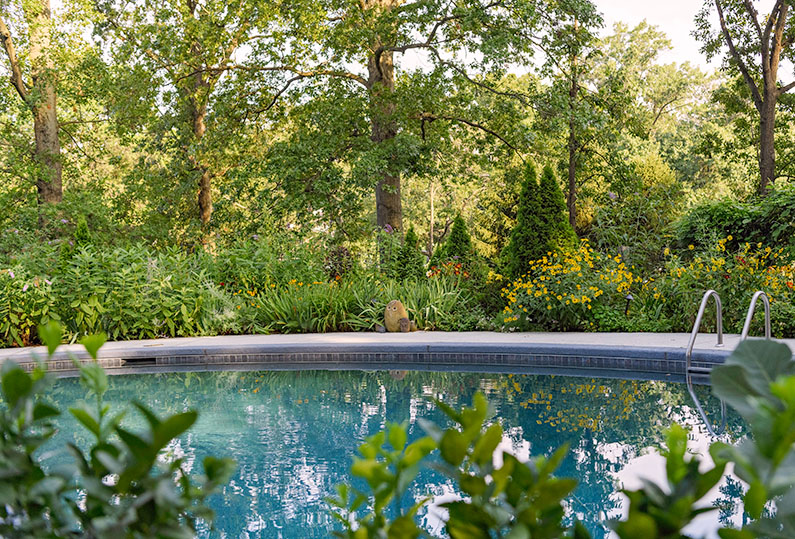
She believes the leaf cover and seed heads kept on her plants over the winter help attract birds and beneficial insects to her garden. To keep the birds happy, she offers up a spa-like heated bird bath that has enticed elusive bluebirds to her garden. In summer, hundreds of fireflies flicker throughout the landscape. “I’m fair and I can’t take a lot of sun,” she explains, “so I like to swim at night. I can see all the fireflies and I also can see bats that are attracted by the pool lights. The bats aren’t scary because they don’t swoop that low.”
Gardening for over 26 years at her home in Frontenac, Celeste continually adds more and more native plants to her landscape. She attributes the milkweed, planted at the back of her pool sun border, for bringing monarch butterflies to her garden. “I got the milkweed in Michigan (where she and her husband Brent vacation) ten years ago,” she explains. “I saw one monarch initially and then others came back. I think that first one was a scout. They claim that monarchs can smell milkweed a couple of miles away.”
Celeste credits her stepmother, who was a Master Gardener, with getting her interested as an adult in gardening. But her gardening genes go back to a grandmother who came from Poland to Franklin, PA, and had “a massive vegetable garden” that fascinated Celeste.
Growing up in Pennsylvania and New Jersey, she moved to St. Louis after she was married and Brent took a job with Wetterau Foods. Initially, raising young children left her little time for yardwork but, as her children got older, she discovered her passion for plants, first at a home in Town & Country and then after the family’s move to Frontenac.
She has always loved daylilies due to the tremendous variety of brilliant colors created by the many different hybridizers. “Over time they seem to have created all the colors in the world,” she says. While living in Town & Country, she recalls a constant battle with the deer nibbling her plants. “I would get up at 4 a.m. to see if the deer were eating my daylilies,” she recalls.
Many of the daylilies in her current garden came from the annual sale of the Greater St. Louis Daylily Society at the Missouri Botanical Garden. “I got there late,” she recalls from one particular year, “and they were just closing. As they were leaving they told me I could have everything they had not sold. It was very exciting!” she notes, thinking of the grab bag of beautiful blossoms that now grace her garden. Since she was given a leftover assortment of varieties, she was pleasantly surprised to see all of the unique colors and shapes of lilies when they bloomed the next year — an experience she never would have gotten if she had not been late to the sale!
These days she depends upon a combination of fencing, Deer Off spray and a granular deer deterrent to protect her garden. While she has help with the mowing and mulching of her yard, Celeste mostly maintains the garden herself, rising at 6 a.m. “when it is cool” during the growing season to weed and look after the beds. Brent, who jokes he “gardens by marriage,” assists with chores like “digging holes” and heavy lifting. He credits Celeste with the beauty that surrounds him. “She has done a very nice job of having something blooming from early spring through fall,” he says.
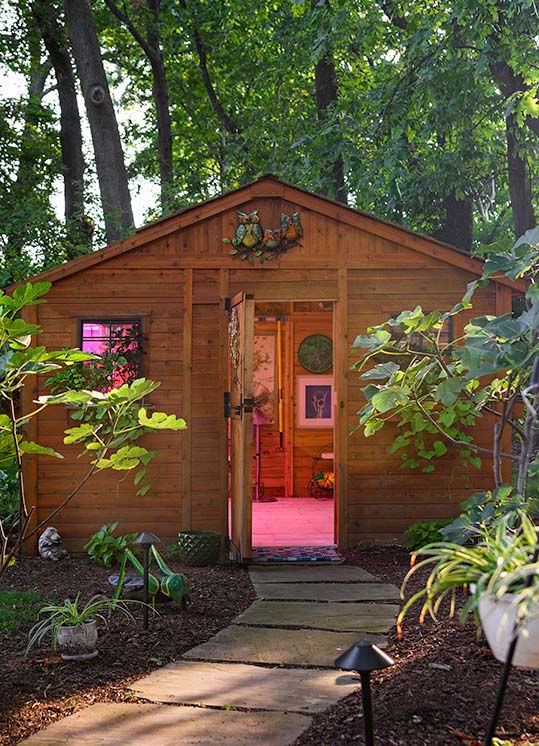
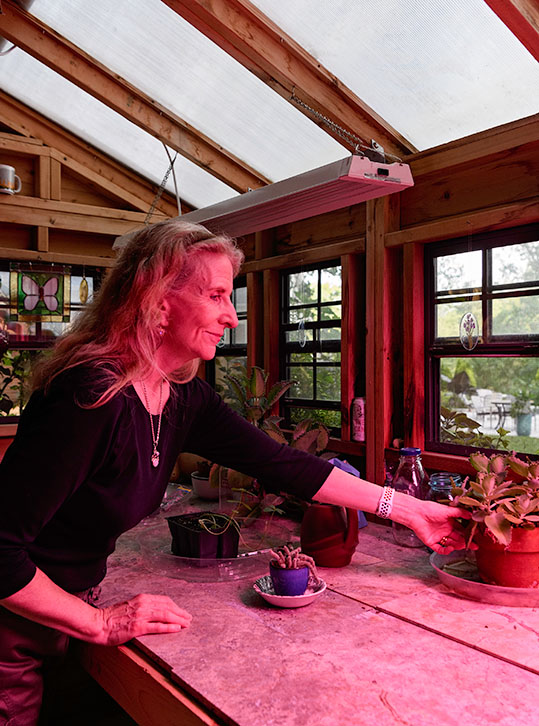
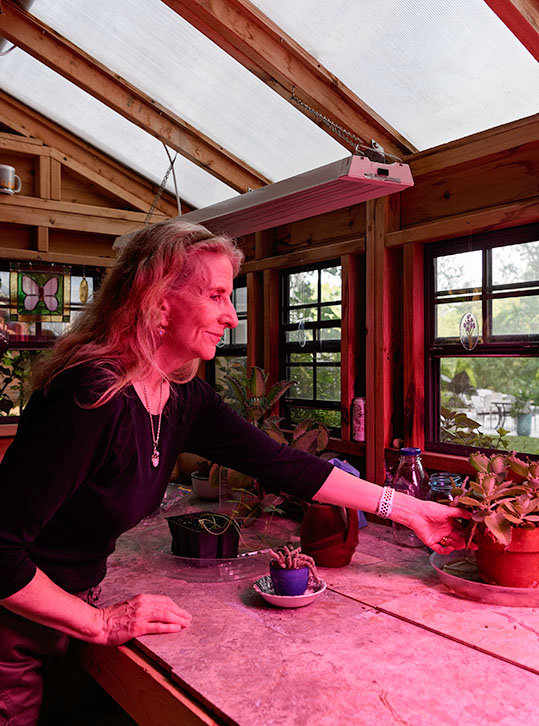
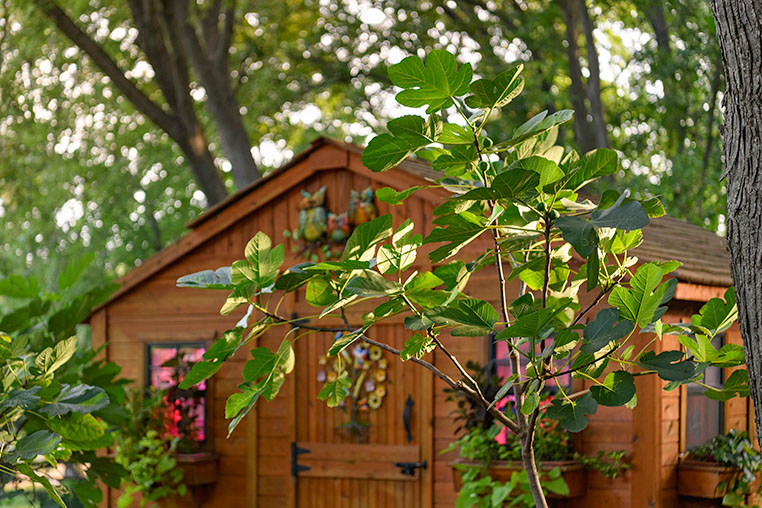
A cedar gardening shed, complete with charming window boxes, serves as a separate landscape attraction, bringing its own charm to the landscape. “I got it as a kit and my lawnmower guys put it together. I decorate it with all the kitschy stuff you wouldn’t put in your house,” she says with a laugh. “I can go out there and feel like I am on vacation.” Complete with heat and grow lights on timers, the shed serves as a place to over-winter the fig trees that enhance the patio in warm weather months.
The fig trees are especially close to Celeste’s heart. “The fig was brought over from Italy by the parents of one of my best friends,” she explains. “When she found out she was dying of cancer, she drove the fig from Ohio to leave it with me.” Since then, Celeste has propagated additional figs to keep her friend’s memory alive. ‘It’s easy to root,” she says. “I basically just cut off a branch and pop it in the soil.”
The entire garden is a tribute to Celeste’s love of nature and her close observation of the plants and their surroundings. With a mostly shaded landscape, grow lights supplement the sun in a small, fenced vegetable plot, a gardening aid her grandmother would have found amazing.
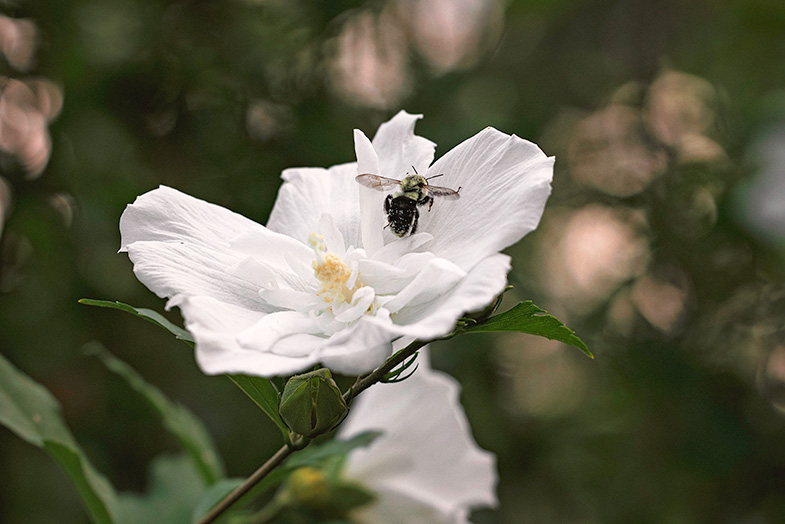
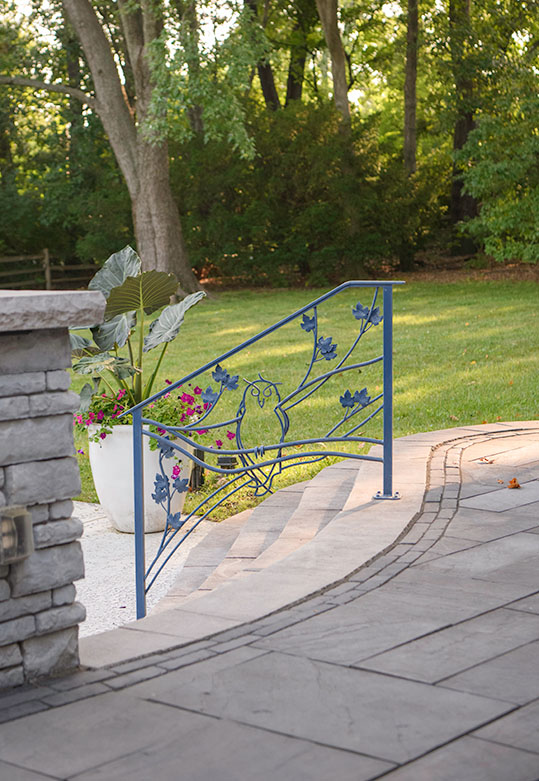
A talented amateur photographer, Celeste has documented treasured outdoor events. A photograph of an owl, who hung out in a backyard tree, was transformed into wrought iron by Perpetua Iron. It now accents the railing of the patio steps. Other photographs of a monarch emerging from a chrysalis and an endangered American bumblebee, distinguished by the yellow hairs on the hind half of its abdomen (“I call him my ‘golden bee,’” Celeste says) are the subjects of a charming children's book she created.
Celeste sees the hours she spends in her garden as anything but work. “I enjoy being outside and I really like having my hands in the dirt; seeing the miraculous process of seeds turning into beautiful flowers or vegetables,” she says. “I have an acre and a quarter and I feel obligated to turn it into something other than just grass.”
