

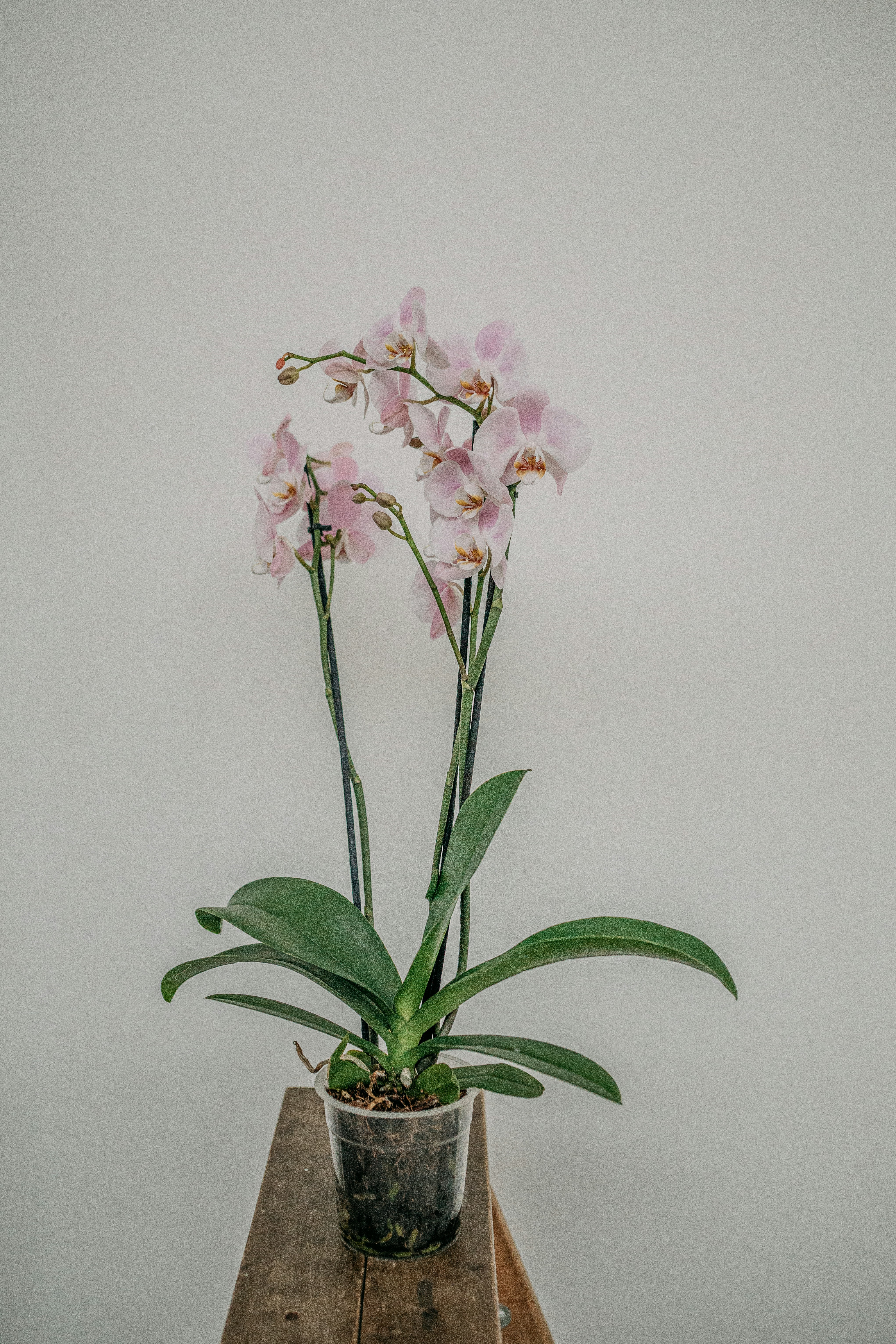
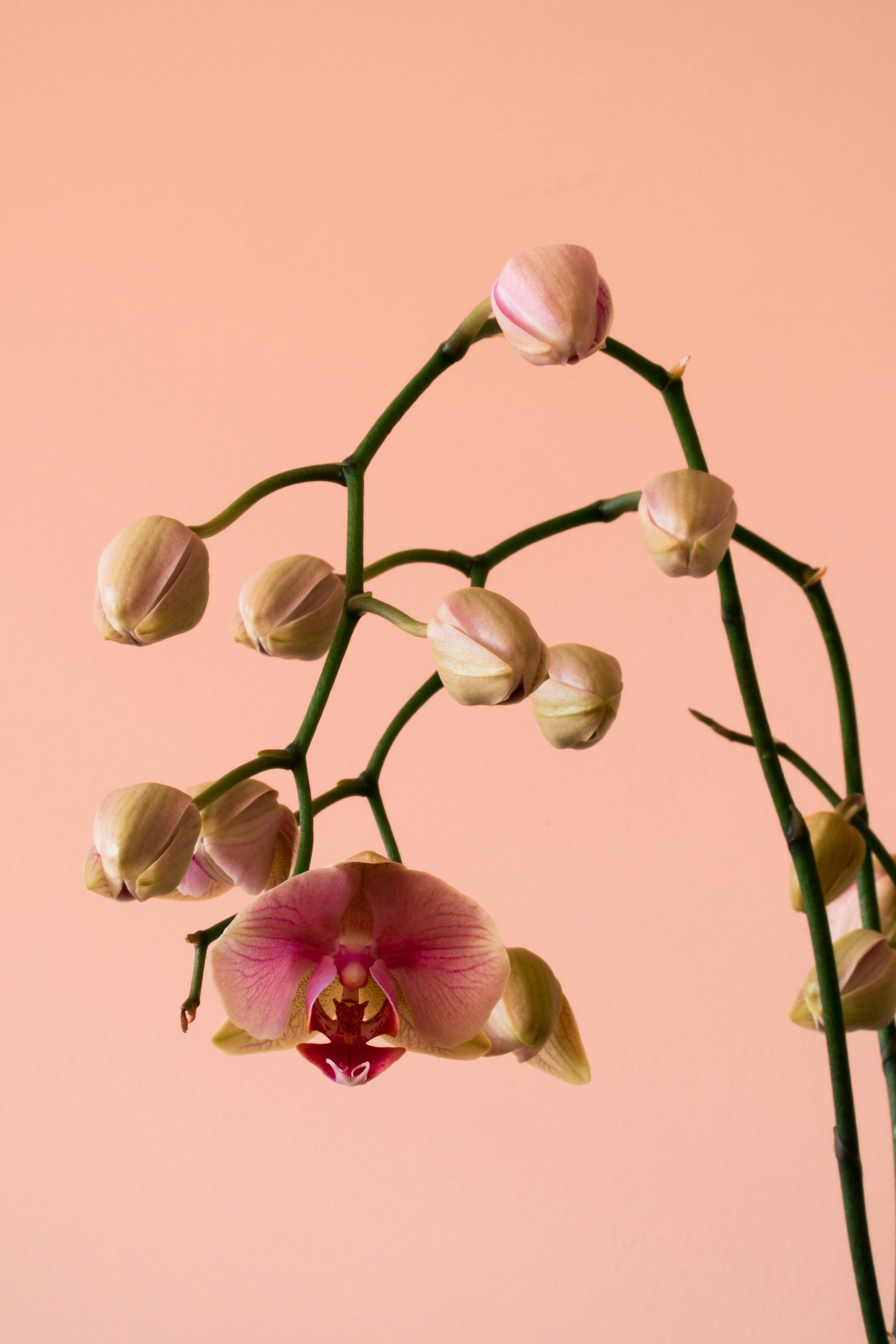
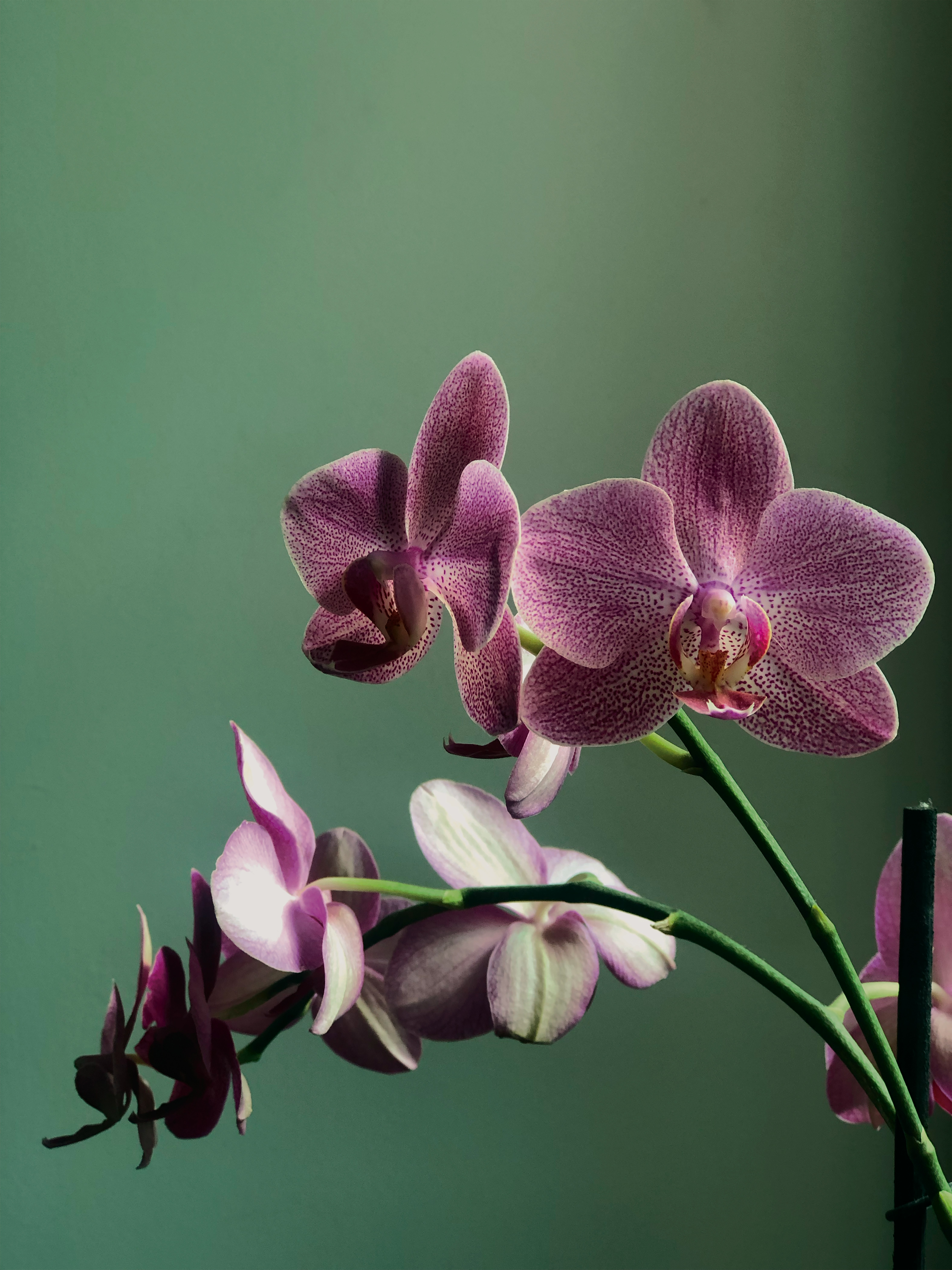
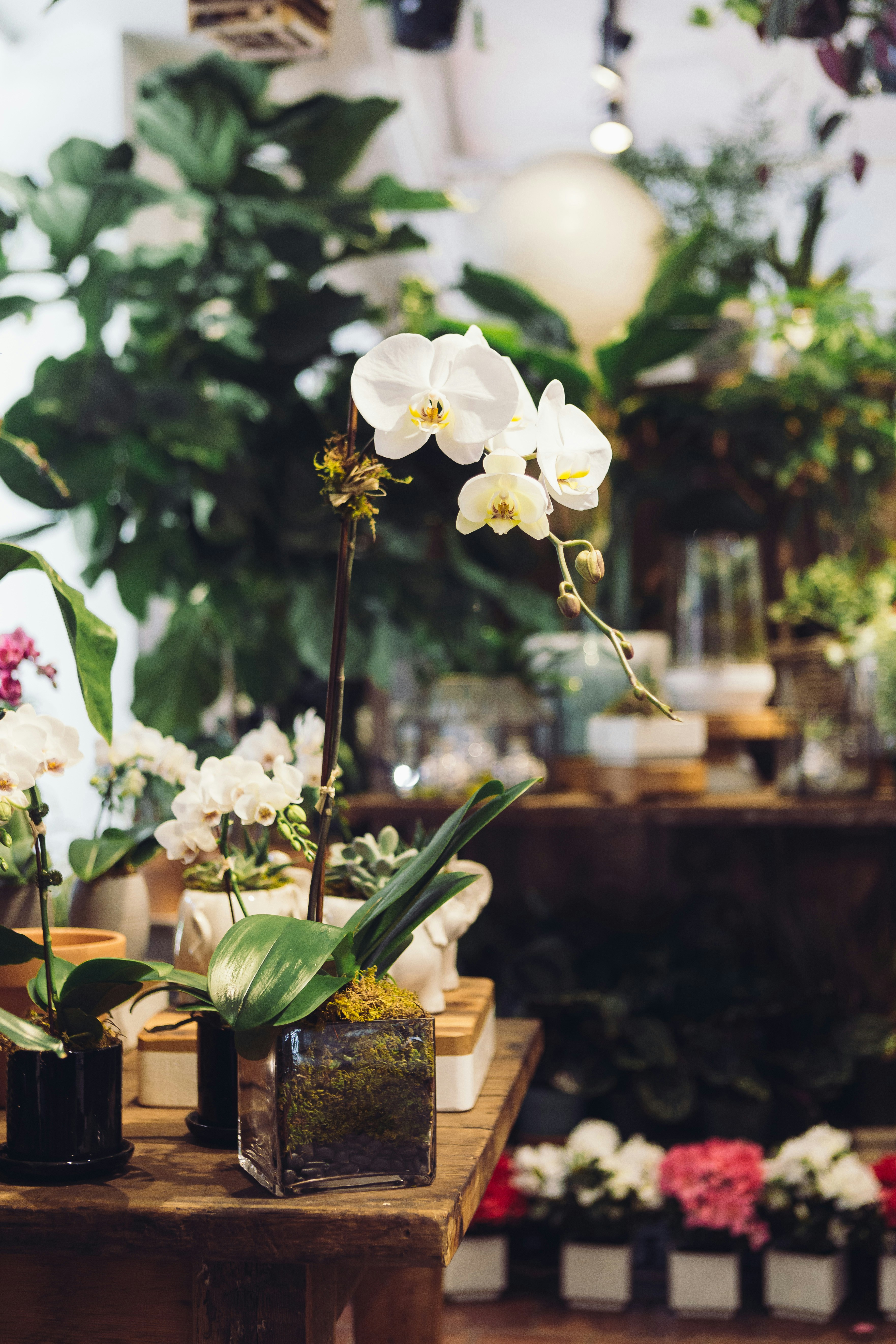




Orchids are a beloved indoor plant that can make quite the statement when in full bloom, though it can seem difficult to get them flowering again after the first round of flowers. Taking proper care of a tropical flower may seem intimidating, but all orchids require are a little extra attention and learned intuition!
There are two primary factors to keeping an orchid healthy: sunlight levels and watering. Orchids need lots of direct sunlight as much as they can take without drying up, which should never be a problem if they are getting adequate water. Alternatively,
the most common mistake with household orchid care is overwatering, which typically is only a problem when they aren't getting adequate sunlight to help that extra water evaporate. It's all about balance here-keep your orchid watered consistently and in a windowsill that gets at least 1-4 hours of sunlight per day.
The trickiest part of caring for your orchid is watering it. If you've heard the trick of watering your orchid with ice cubes, then you might have also heard the controversy about it, too. The answer to this debate is that it's fine, but not the best option. The idea of using ice cubes is that the orchid will essentially be self watering. The ice cubes will melt slowly and give the orchid just enough water to grow without drowning it and creating root rot. This may work for some plant owners who struggle with regular watering and live in a less sunny environment. Many people have success with this method, so it's not a bad option by any means!
On the other hand, if your orchid is getting enough direct sun, the ice cubes are likely going to melt and evaporate quickly or not provide enough water to the full length of the root system. In a warmer, sunnier environment, the best way to water your orchid is to fully soak the roots. Run water through the pot until water is flowing from the drainage holes and all of the soil media is saturated. The direct sunlight will eventually evaporate any extra water, at which point you will want to repeat the watering stage again. You can determine the dampness of the soil when a wooden stake or skewer inserted into the potting mix comes out almost dry. It's also a good idea to get a sense of the heft of the plant when it is saturated versus dry!
If you feel that your orchid is still struggling to thrive, then you may want to look into other factors like the type or soil media or pot material and size. There are lots of great resources online from botanical organizations that can provide more tips. If your orchid stops producing flowers, don't feel bad! This tropical plant may be finicky but she has the potential to thrive with just a little extra time and care.
