

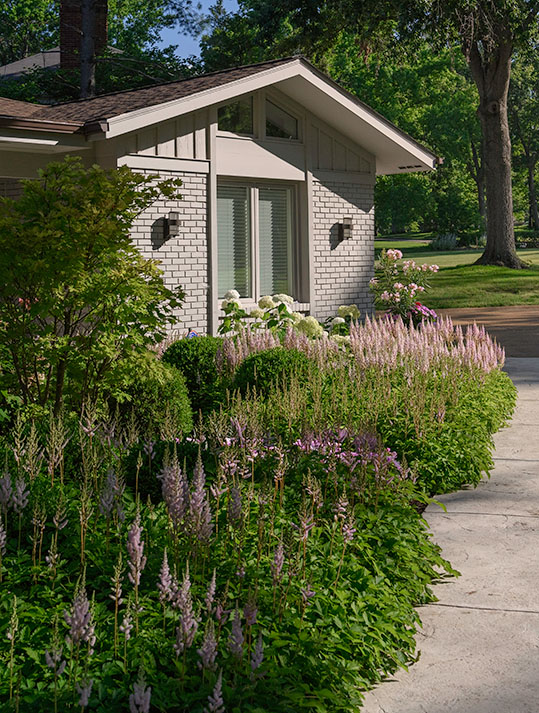
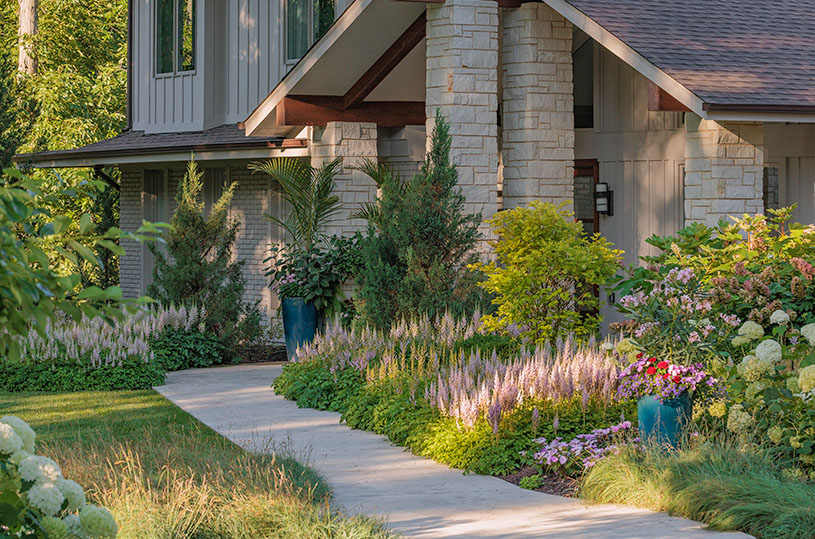
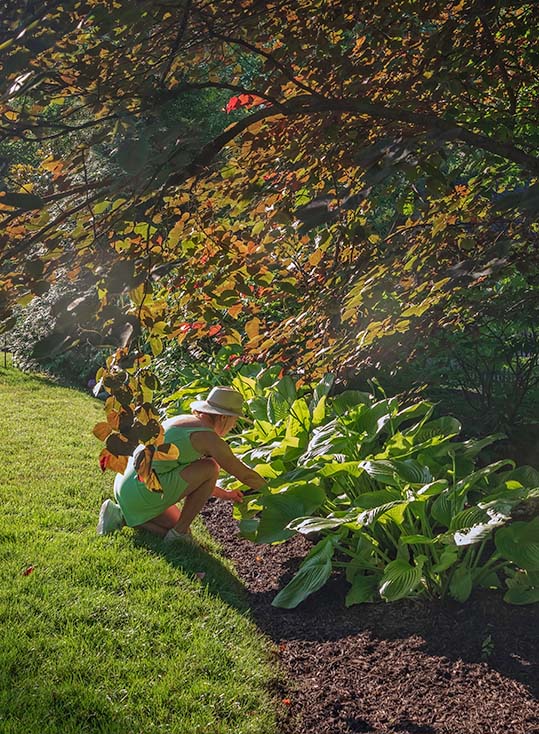
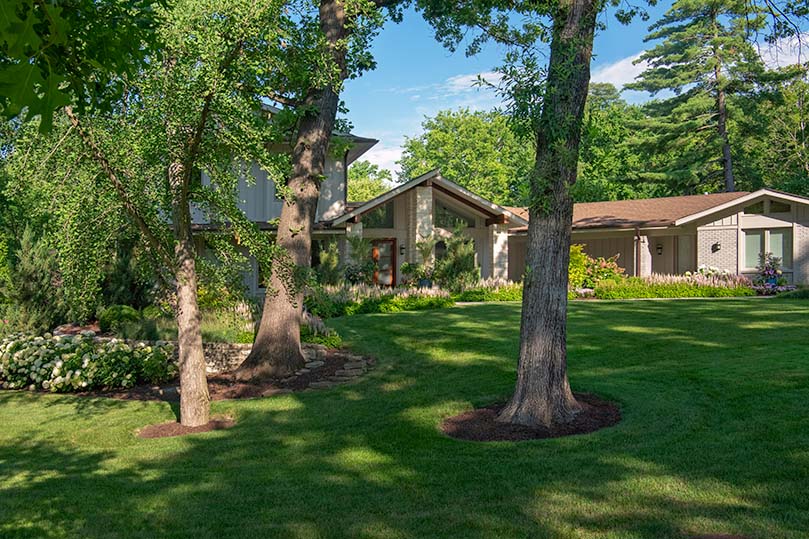
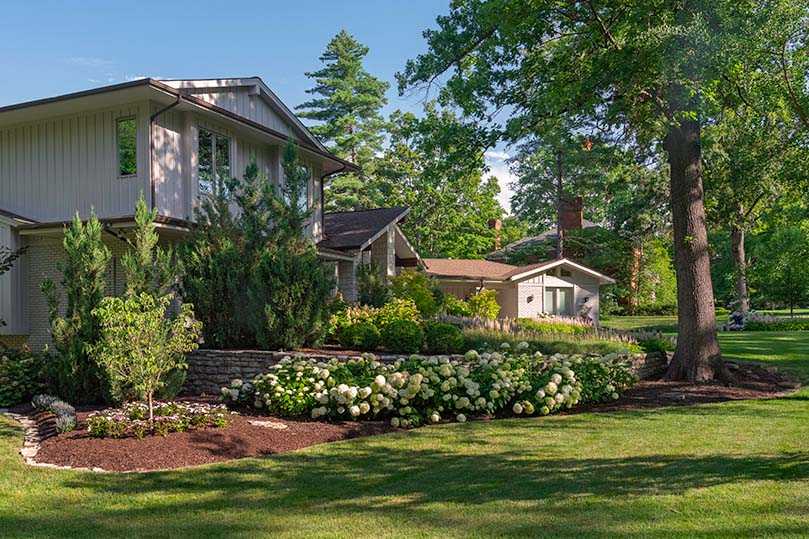
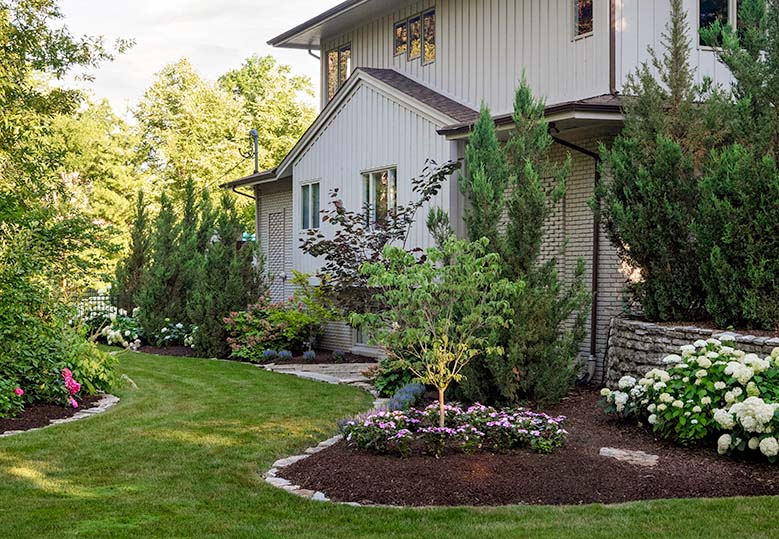
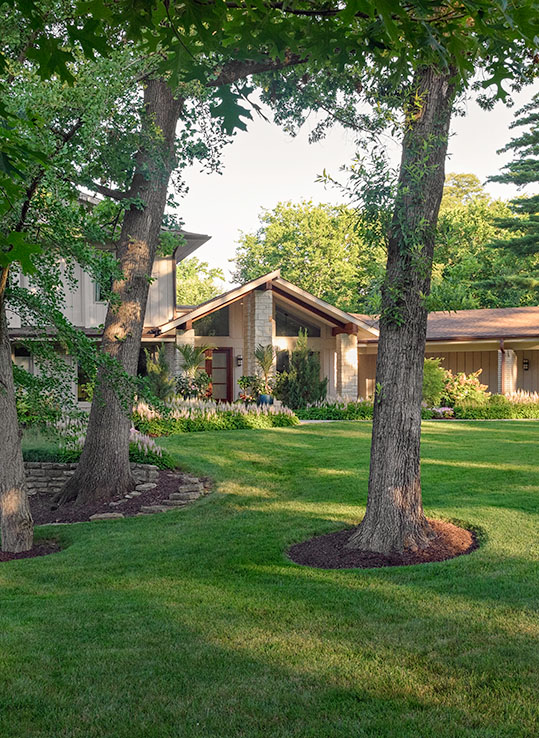
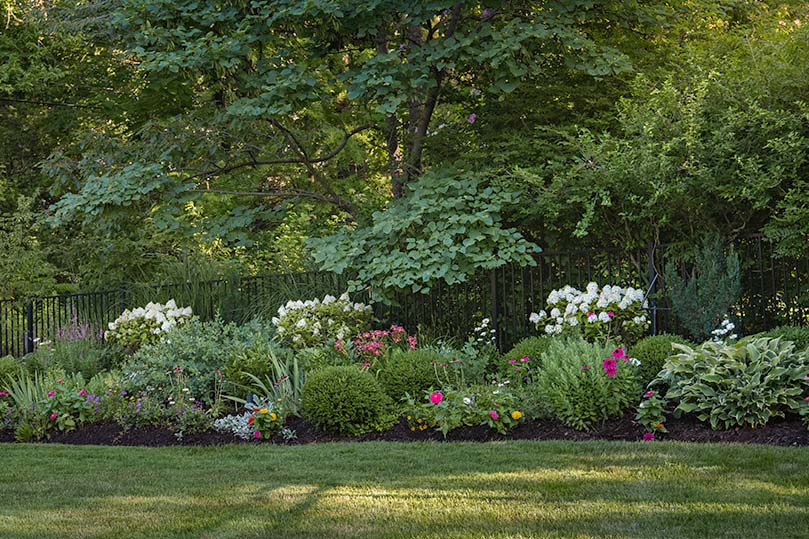













ita Diekemper describes it as a “hobby gone crazy.” Others might describe it as gardening genius. In her own one-acre Frontenac garden, hydrangeas, boxwoods and viburnums anchor many of the landscaping beds where dogwoods, redbuds and colorful, red-leaved Japanese maples provide height. Majestic oaks, highlighted by mulched surrounds, become part of the landscaping design.
Hydrangeas are a particular favorite due to their adaptability to both sun and shade and the wide variety of sizes and bloom times. Her collection includes native ‘Annabelle,’ ‘Sike’s Dwarf’ oakleaf, ‘Pee Wee’ dwarf oakleaf, long-blooming Endless Summer and early-blooming ‘Quick Fire’ hydrangeas.
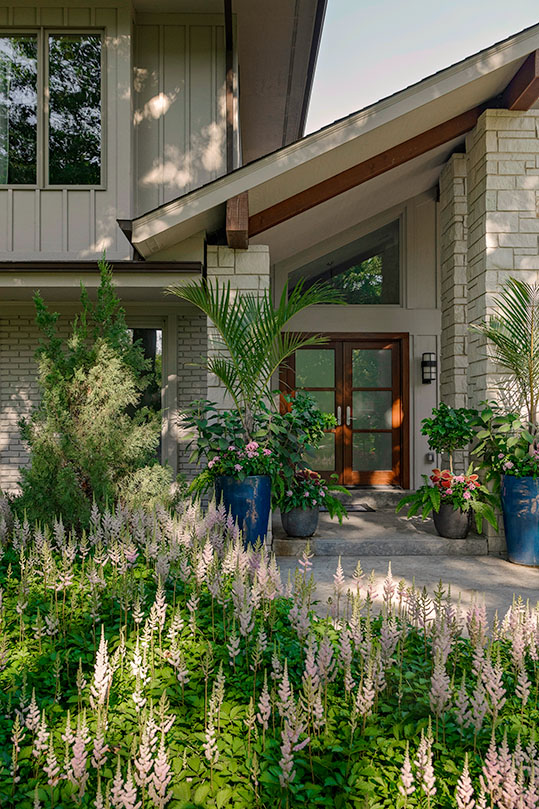
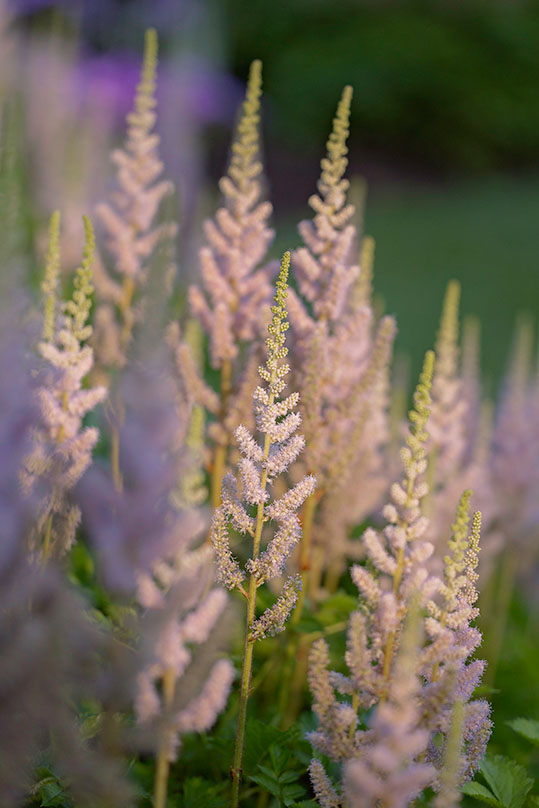
A groundcover of Chinese astilbe ‘Pumila’ with spikey, pale pink blossoms takes center stage, adding architectural interest from May through August. Thriving in part to full shade, it works well amidst the oaks and hydrangeas. In sun-kissed areas Rita includes natives such as the spring blooming, blue spikes of native baptisia with its shrub-like gray-green foliage, later blooming plumes of purple lythrum and iris inherited from her grandfather’s garden.
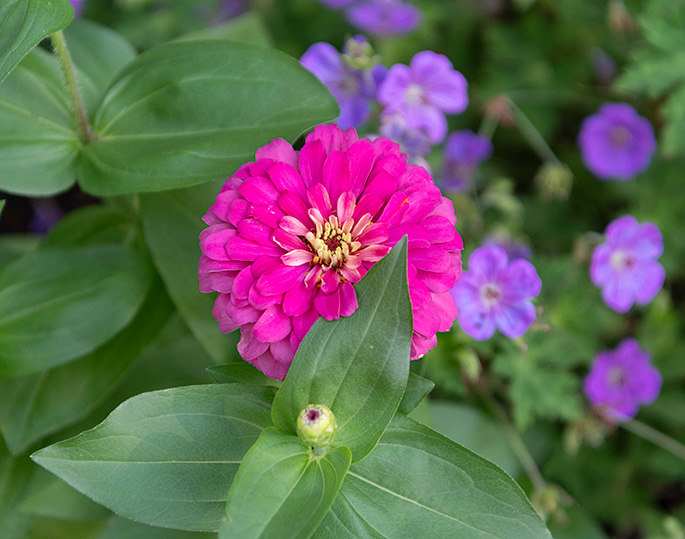
Pale blue Stoke’s aster or Stokesia, native to the southeastern United States, is another favorite. “It begins blooming sporadically in late spring but is prized for the mid-summer and fall show,” she says. “Its floral mounds are a favorite stopping point for pollinators. It is wonderful as a cut flower and a great, drought tolerant plant for native and wildflower plantings.” Annual zinnias add season-long shots of color in landscaping beds.
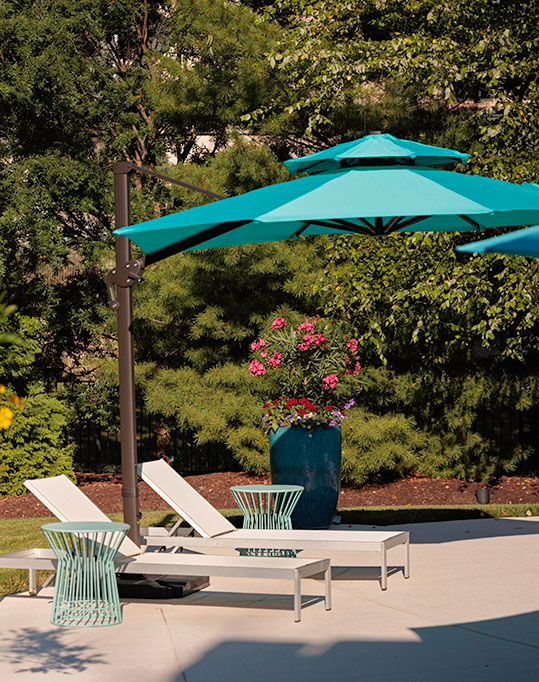
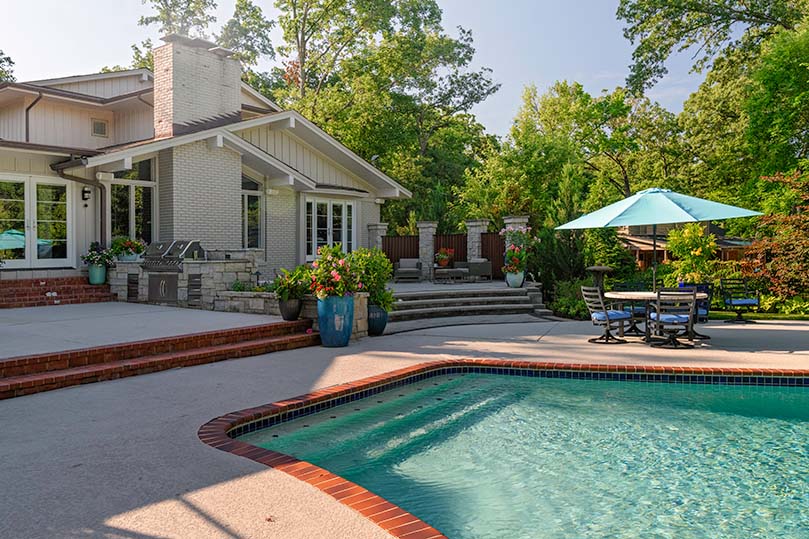
Around her pool and patio, brilliant tropicals such as cannas, hibiscuses, oleanders and lantanas fill pots and add to the gardening show.
While what Rita does in her own garden is enough to gain acclaim, it is what she does in other people’s gardens for which she is best known. As the founder of Gardens of Grace, she, along with longtime partner Craig Schrock, oversees a staff of 30 that design, install and maintain gardens.
With a degree in accountancy from the University of Missouri, she left a career as a Certified Public Account 30 years ago to begin a landscaping business. “I started working in my yard and just loved it,” she recalls. “I had friends who said, ‘I love what you’ve done. Can you help me?’ My husband says I ran out of room in our yard and had to start working in friends’ yards.”
"One of my friends said I should start a business," she remembers. “I hung out at nurseries a lot but when I got into it (the idea of starting a business) I realized I needed more knowledge, so I went to Meramec (Community College) and got a degree in horticulture.”
The name of the firm came from her desire to have a title that sounded feminine and Grace is the name of her youngest daughter. Rita started small, basically doing garden design. “One of my designs was for this woman and afterwards, her son called me and said, ‘I installed my mom’s garden. Can I get a job with you?’”
The partnership has proved to be a good one. “I was a little more relaxed. He had a little more enthusiasm,” she says of Craig Schrock, who has studied horticulture at both Meramec Community College and the Missouri Botanical Garden. He specializes in landscape design, estimating, lighting and installation of custom designed landscapes, patios and walls. Rita handles design, plant selection, maintenance, supervision and client service. The partnership is now in its 20th year and has 30 employees. Gardens of Grace continues to work with the Meramec horticulture program to hire graduates and help them to turn horticulture into a profession.
Both Rita and Craig have continued with their own landscaping education. Rita is a Certified Arborist with the International Society of Arboriculture and a certified pesticide applicator. Craig is a certified NCMS installer for the installation of Versa-Lok retaining walls and a certified ICPI installer by the Interlocking Concrete Pavement Institute.
The company is a member of the Landscape & Nursery Association of Greater St. Louis and Rita is treasurer of the group. “Another aspect of the plant industry is that you are always learning something new,” Rita says. “There are thousands of plants. There is no way you can learn about all of them but every day, you learn something new. I visit five nurseries regularly looking for what is most striking.”
Whether working on her own landscape or designing for others, it is important to have a master plan, Rita emphasizes. “It is important to pull the landscaping out and away from the house to give it room to spread out. You want to frame the house, but you don’t want to be pruning things all the time. For the first four years we lived here, we implemented the design,” she says, noting that creating a beautiful landscape requires the patience to let things grow and fill out. “Now, we tweak it. You’re never finished.”
Dealing with struggling large trees has been one of her biggest challenges. “The Metropolitan Sewer District had done a large project nearby that led to the death of a number of oak trees," she explains, noting that she is working with Metropolitan Forestry Services to preserve the remaining oaks. In addition she is adding new, young trees to her landscape including oaks and native black gum/black tupelo trees. Renowned for spectacular red-orange fall color, black gums are adaptable to a variety of conditions and are important to a variety of ecosystems, supporting over 200 varieties of moths and butterflies.
Succession planting is important, she points out. “I have large oak trees because 75 years ago, someone planted them. “If you are designing or maintaining a property” she continues, “you need to have good communication with the clients. When you have good communication, you can really zero in on what clients like and make better decisions. Some people may want natives for pollinators, and some people want a more refined look. They can’t tolerate too much messiness.”
Another important consideration, she points out, is “understanding how they use both the outside and inside of their house; how things flow. Most people view their landscape from inside their house. You have to know what their views are when they look out of their windows.
“It is really hard work,” Rita says of landscaping. “But you make people happy. As a CPA, it felt like no one really liked you. In this job you’re outside and you are working with nature. At the end of the day, you can see exactly what you have done.”
